
Waste-to-Energy Facility Monitoring / Expansion Study (Kent County, Michigan)
Monitoring
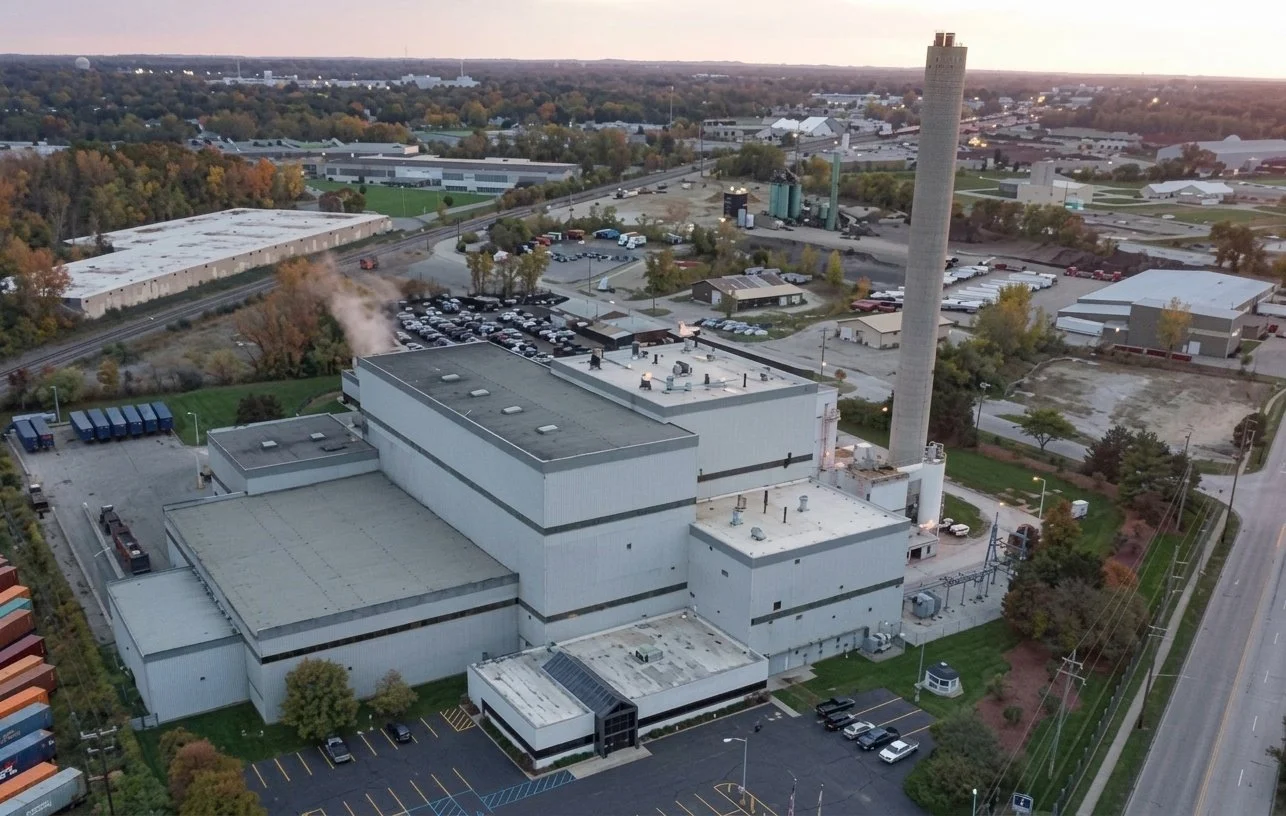
GBB was tasked with providing assistance in monitoring the operation, maintenance, repairs, and renewal of the Kent County Waste-to-Energy facility. The assignment included observing boiler inspections and repairs, and inspecting and observing the balance of plant equipment and facility infrastructure, to subsequently provide recommendations for desirable repairs/renewals to ensure the continued reliable and efficient operation of the facility.
Expansion Study
Relying upon a nominal 625 TPD WTE facility to manage the municipal solid waste generated by six cities, the County was unable to process all the waste, resulting in the bypassing of almost 70,000 tons per year of MSW to the landfill. GBB was tasked with studying the economic feasibility of expanding the WTE facility by adding a third boiler, thereby redirecting this waste away from the landfill.GBB analyzed key data about the facility and prepared a Request for Information (RFI) for transmittal to representatives of manufacturers of MSW combustion boilers seeking conceptual information regarding recommended boiler configuration, general arrangement, and waste processing capabilities; budgetary equipment supply and erection cost estimate; expected boiler air emissions; required service utilities, and; supplier schedules for the design, manufacture, and erection of the expanded system.GBB also reviewed the facility’s residue-handling system, utility systems, and distributed control system to determine which upgrades may be desirable. The Capital Improvement Plan was also reviewed for consistency with an expanded facility. Using information obtained from the RFI, the facility review and analysis, and other industry data, the GBB Project Team prepared conceptual-level capital cost and operating cost estimates for the WTE Expansion.