

Development of State-of-the-Art Mixed Waste Processing Facility (Wasatch Integrated Waste Management District, Utah)
Feasibility Study
As the District’s waste-to-energy (WTE) facility was due for major upgrades, the District learned that the steam contract from the WTE facility would not be renewed. With this loss of revenue, the decision was made to close the facility, leading to a much higher landfill fill rate, which was due to reach capacity within 20 years. Due to the need to reduce landfilling and increase material diversion, the District evaluated its options and asked GBB to perform a feasibility analysis — with preliminary layouts, costing scenarios, and financing options — for developing one of the following:
- Transfer station to move materials to a regional landfill
- Transfer station with a mixed waste processing facility to recover recyclable commodities
- Transfer station with a mixed waste processing facility to recover recyclable commodities and produce a cement kiln fuel
Procurement
After deciding to proceed with the development of a transfer station with a mixed waste processing facility to produce recyclable commodities and cement kiln fuel at the site of the old waste-to-energy facility, the rigorous procurement process, approached strategically, was initiated. The RFP team, led by GBB, considered various contracting approaches — including contracting each step separately, design/build, and design/build/operate — and discussed and set forth the selection criteria. The RFP document was structured to encourage proposers’ participation and creativity in developing a versatile, flexible system.
As part of the final contract development process, negotiation points included factors such as payment schedules, performance guarantees, testing protocols, spare parts inventory supplied with the system, break‐in/startup support period, construction sequencing, performance schedule, liquidated damages, and insurance.
Owner’s Representative for Design, Construction, Testing, and Acceptance of Mixed Waste Processing Facility Construction
GBB was tasked to act as the Owner’s Representative during the construction. As such, GBB supported WIWMD during the Design Phase to monitor the overall process and report on the system development in accordance with the Contractors’ contractual obligations. During the Construction Phase, GBB also supported WIWMD by attending weekly construction meetings; conducting periodic site inspections; observing progress; coordinating, reviewing, and recommending change orders as required; and reviewing and signing off on invoices.
During the Testing and Acceptance Phase, GBB performed duties that included reviewing the Construction Certification and Acceptance Report for substantial completion of equipment; assisting with punch list development, coordination, execution, and documentation; and witnessing the commissioning of equipment, commercial start-up monitoring and testing, and final acceptance.
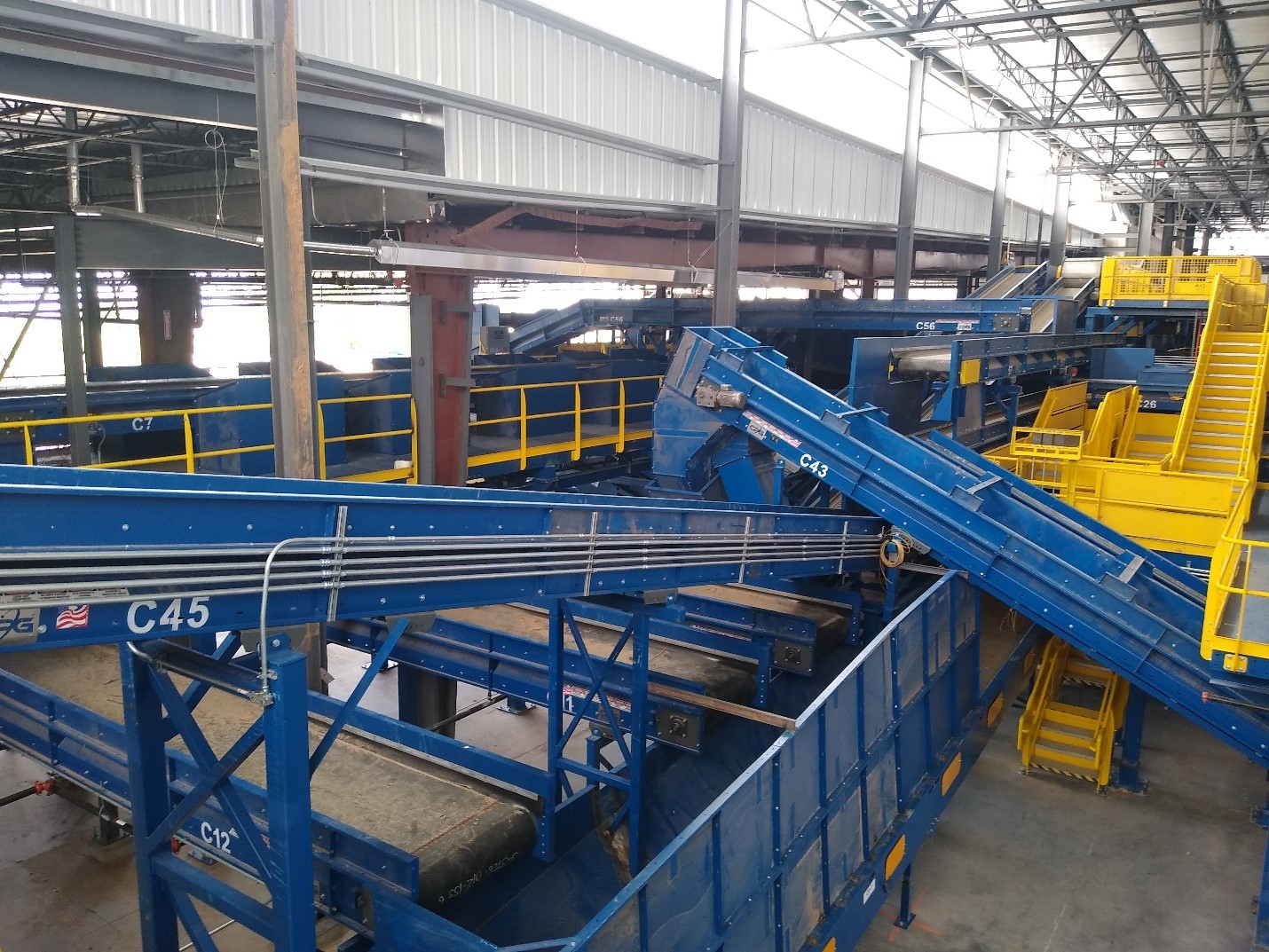
In June 2020, operations began at the new state-of-the-art facility. Waste is processed in a highly mechanized system that recovers recyclable materials for sale to the market. Materials currently recovered for recycling include clean cardboard, aluminum cans, empty steel cans, and plastic bottles (#1 and #2). Paper and plastics (#3 through #7) are recovered to produce an engineered fuel that industrial sources can use to offset coal use. Organics, such as food waste and grass, are concentrated and can be used as feedstock for anaerobic digestion that generates renewable natural gas. The remaining residue from the facility is transferred to a regional landfill, which extends the life of the local landfill.
Videos featuring the operations of the new system and its capabilities are available at www.wasatchintegrated.org/material-recovery-and-transfer-facility

Connect with us
8300 Boone Boulevard
Suite 500
Vienna, VA 22182
(703) 573-5800
hello@gbbinc.com
Newsletter
The GBB Circular Newsletter
Sign up to have our newsletter, providing the latest news about GBB and the industry, sent to your inbox. Your email address will not be sold/provided to third parties and will only be used by GBB to send the newsletter and occasionally reach out regarding our solid waste consulting services.
Current and past issues are also available to view/download.