
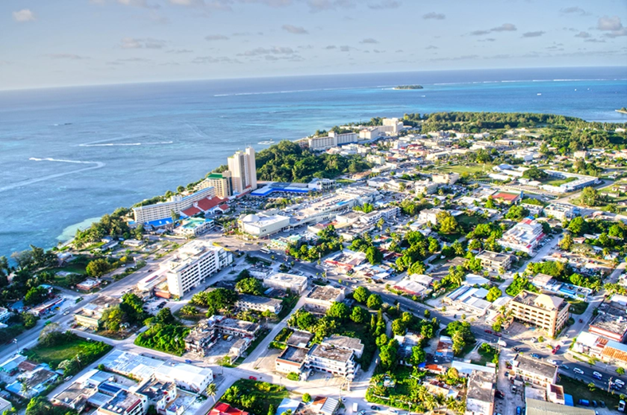
Development of Comprehensive Inter-Island Integrated Solid Waste Management Plan (Commonwealth of the Northern Marianas Islands, Saipan)
Through a rigorous competitive procurement process, the team led by GBB was selected by the CNMI to develop a comprehensive inter-island Solid Waste Management Plan. The primary mission was to help CNMI achieve its important and tangible goal of zero waste and significantly increase the capacity to reduce, reuse, compost, and recycle materials, dramatically minimizing and diverting the amount of waste currently destined for disposal.
The Plan, with a focus on zero waste, aimed to address all aspects of waste management, from generation to final disposal. The effort was critical to accelerating the meaningful work of sustainably managing materials in a way that prioritizes responsible waste management, the protection of the islands, and the preservation of their beauty for residents and visitors to enjoy for generations to come.
The Plan was to build off the existing community plans that were completed and solidify a clear and realistic path forward for the CNMI government to follow, including strategies for the prevention, collection, and processing of residential and commercial waste, as well as benchmark metrics to illustrate the progress that is made along the way. It was envisioned that the project’s larger goal was to establish a detailed blueprint, factoring in the entire CNMI community as a system to collectively achieve the benefits of zero-waste planning.
The GBB Project Team collaborated with the Office of Planning and Development, Department of Public Works – Solid Waste Management Division, and the Inter-Island Solid Waste Task Force as project leads to assess the capacity of the entire infrastructure across the islands in the context of the technical, management, financial, economic, and market options for sustainable solid waste and materials management in the CNMI. The goal was to build on and unify existing plans, and expand planning, staffing capabilities, and infrastructure capacity to include specific training plan recommendations to help build local staff capacity and to fill critical current data gaps to support improved forecasting of costs and needs in ongoing internal comprehensive and integrated planning to carry out Zero Waste policy and program development.
Solid Waste Characterization
As part of the long-term planning, the GBB Project Team conducted a weight-based data assessment of existing and projected solid waste streams, including Transfer Stations, the Marpi Landfill, and illegal dumps and dump sites. The assessment further included information from the island waste streams from Rota, Tinian, and the Northern Islands.
EPA’s Approval of the Plan, Unlocking Significant Federal Funding
In September 2025, the US Environmental Protection Agency (EPA) formally approved the Plan, unlocking access to nearly $34 million in additional federal funding. Sourced through the Additional Supplemental Appropriations for Disaster Relief Act of 2019 (ASADRA), these funds are specifically designated for solid waste and recycling infrastructure projects prioritized by the Plan to enhance, modernize, and develop a resilient solid waste and recycling infrastructure across Saipan, Tinian, and Rota in the years ahead.
More information on the CNMI Office of Planning and Development website:

Connect with us
8300 Boone Boulevard
Suite 500
Vienna, VA 22182
(703) 573-5800
hello@gbbinc.com
Newsletter
The GBB Circular Newsletter
Sign up to have our newsletter, providing the latest news about GBB and the industry, sent to your inbox. Your email address will not be sold/provided to third parties and will only be used by GBB to send the newsletter and occasionally reach out regarding our solid waste consulting services.
Current and past issues are also available to view/download.